Page 10 - kayaksession54_flipbook
P. 10
InDUStRY mAGAZIne
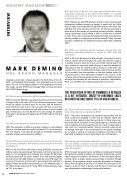
mARK DemInG
NRS BRAND MANAGER
Originally a mail order company based in the North-West of the US, NRS - aka Northwest River Supply - has developed over the recent years into one of the biggest players in the paddlesports industry. We caught up with NRS brand manager Mark Deming during the 2015 PADDLEexpo show...
BG: Tell us how it all started for NRS in the paddlesports industry.
NRS: Our founder, Bill Parks, was a business professor at the University of Oregon back in the early 1970s. He had some progressive—some would say radical—business ideas for the time, and he wanted to prove that they could work in the real world. Bill was an avid river runner and knew from experience how difficult it was to source quality gear in those days. So, with $2,000 of his own savings, he stocked some gear in his garage and typed up the first NRS catalog. That was in 1972.
BG: NRS is still primarily a paddlesports retailer?
NRS: The perception of NRS as primarily a retailer is a bit outdated. Direct-to-consumer sales account for only about 15% of our business. The vast majority of our sales go through our wholesale channels to specialty retailers and professional outfitters.
BG: So NRS is now also producing its own line of products such as dry wear, baselayers, SUP boards, and accessories. how did that happen?
NRS: In the mid-1970s, Bill began having difficulties sourcing the military surplus de-lousing bags that boaters commonly used as dry bags. So, he purchased some materials and created the Bill’s Bag, the first purpose-built dry bag for boaters. Soon after that, he adapted tie-downs from the freight industry to create the iconic NRS strap. The success of those early products led to more accessories, and then to apparel. When we started manufacturing our own inflatable boats in the 1980s, things really took off. Today, NRS-branded products make up 70% of our sales.
BG: how does it work to sell your own products and other companies’ products at the same time? When you started producing your own line, were there some companies refusing to carry on with you?
NRS: Originally we sold NRS products directly to end consumers and professional outfitters through our catalog. It wasn’t until the 1990s that we made a concerted effort to get NRS products into shops. We definitely met some resistance at first, but over time we were able to break down those barriers by producing excellent products, building strong relationships and providing a level of service that is second to none. We’ve also continually de-emphasized retail since that time, focusing instead on creating end-consumer demand. Today, our retail business compliments our wholesale business rather than competing with it.
BG: NRS is an employee-owned company. explain how that happened and what difference it makes for NRS staff and customers.
NRS: In 2013, as Bill neared his 80th birthday, it was time for him to make a decision about his legacy. He could have sold the company to outside investors, taken his money and retired, but that wasn’t his style. Instead, he personally helped finance a deal that allowed his employees to buy the company without having to invest their own savings. This is an incredible gift and helps ensure financial security for our workers, from the executives to the guys loading trucks. As employee-owners, we’re personally invested in the success of the company and we take tremendous pride in our work. Building the best products and providing the best service is everyone’s responsibility. When you call NRS, you’re always going to talk to an owner.
The perception of NRS as primarily a retailer is a bit outdated. Direct-to-consumer sales account for only about 15% of our business.
BG: Back to the retail activity of NRS. has the online revolution been a blessing for a company like NRS?
NRS: The online marketplace has delivered opportunities that we never could have imagined in 1972, and we certainly spend less money printing catalogs today than we did ten or fifteen years ago. We’re fortunate to have been on the leading edge of e-commerce and online marketing from the beginning, but it’s a never-ending battle to stay there. As I mentioned earlier, direct-to-consumer sales are an increasingly small part of our overall business; the greater challenge for us today is serving our business-to-business customers on the Web while marketing our brand and products as a manufacturer.
BG: how do you deal with the trend that a lot of brands and shops are now selling on Amazon and other marketplaces, which are virtually impossible to beat in terms of delivery but somewhat «kill» the service?
NRS: It’s tough, because Amazon and eBay are really good at making their platforms enticing to retailers. For example, Amazon has recently offered retailers the ability to use Amazon as their third-party logistics provider. When a retailer warehouses and ships its products through Amazon, those products receive automatic placement on Amazon Prime. We’re not going to tell one of our dealers who they can use for logistics—that’s for them to decide—but this type of trend does add new complexities to maintaining a strong dealer network.
10
PADDLE-EXPO 2016 BUYERS GUIDE
InteRvIeW